YouTube Monetization Changes 2027: 8,000 Watch Hours or 20M Shorts Views
By The iamcreator.io Team · August 12, 2026
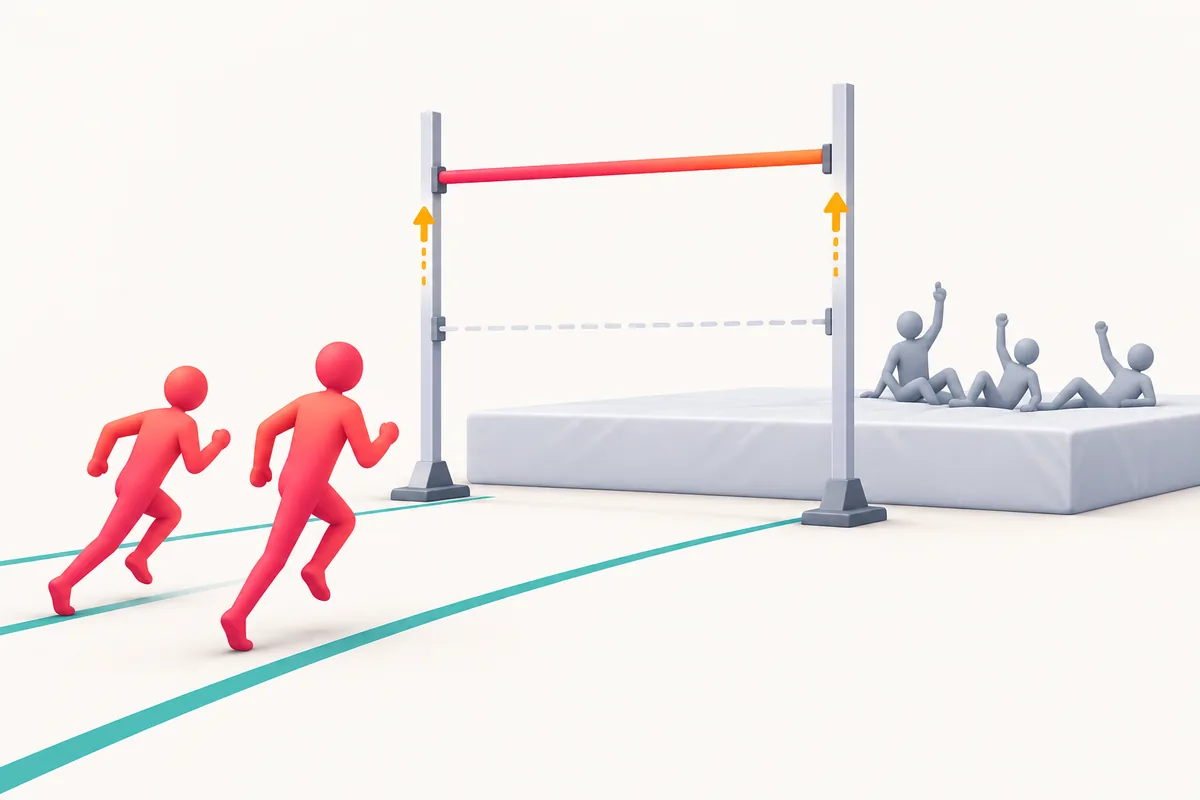
The YouTube monetization requirements change on February 1, 2027. From that date, new Partner Program applicants need 1,000 subscribers plus either 8,000 qualified public watch hours in a year or 20 million qualified public Shorts views in 90 days to unlock ad and Premium revenue sharing. That is double today’s bar, and the first raise since 2018. If you’re already in the program, you’re grandfathered. If you’re not, the window to get in under the old rules is closing: 113 days as of October 11, 2026.
This post covers what changes in 2027 and who it affects. For everything you need today (both 1,000-subscriber paths, the 500-subscriber fan funding tier, what counts toward watch hours, and the policy gates), see the full YouTube monetization requirements for 2026.
What actually changed
Three separate things landed in the same announcement, and they get mixed up constantly. Let’s separate them, because they apply to completely different groups of creators.
| Requirement | Today | From Feb 1, 2027 | Who it applies to |
|---|---|---|---|
| Subscribers | 1,000 | 1,000 — unchanged | New applicants |
| Long-form watch hours (365 days) | 4,000 | 8,000 | New applicants only |
| Shorts views to enter (90 days) | 10 million | 20 million | New applicants only |
| Shorts views to keep earning (90 days) | No threshold | 10 million | Everyone, including existing partners |
| Fan funding tier | 500 subs + 3 uploads/90d + 3,000 hours or 3M Shorts views | Unchanged | New applicants |
| Accept updated terms | — | By Jan 31, 2027 | Every current partner |
1. The entry bar doubled — for newcomers
The headline change. To join YPP and earn from ads and YouTube Premium, a new channel will need 1,000 subscribers plus 8,000 watch hours in the last 365 days or 20 million Shorts views in the last 90 days. You still need the subscriber count plus one performance route — not both. YouTube’s stated reasoning is scale: the program now has more than 3 million creators, Shorts pulls over 200 billion views a day, and the company says it expects to pay out more in 2027 than in 2026, not less.
2. Shorts revenue now has a floor — for everyone
This is the part that actually touches existing partners, and it’s getting far less attention than it deserves. From February 1, 2027, to earn from the Shorts Creator Pool in any given month, you’ll need at least 10 million qualified Shorts views over the trailing 90 days. Drop below it and your Shorts revenue share pauses.
The important nuance: this is not an expulsion. You stay in YPP, your long-form ad revenue keeps flowing, your memberships and Super Thanks keep working, and Shorts revenue switches back on automatically the moment you climb back over 10 million. It’s a faucet, not a door.
3. A new definition of an “active” channel
YouTube also spelled out what keeps a partner channel active from February 1, 2027. You need any one of:
- 1,000 qualified watch hours in the past 365 days, or
- 1 million qualified Shorts views in the last 90 days, or
- 2 long-form videos or 5 Shorts posted every 90 days.
Miss all three and you’re flagged inactive — but you get an extended 90-day window to recover via the watch-hours or Shorts-views route. For anyone posting on a real schedule this is a non-event. It mainly cleans up dormant channels sitting on monetization they aren’t using.
Don’t confuse the two Shorts numbers
The deadline nobody in YPP should miss
If you’re already monetized, the threshold changes don’t touch you — YouTube’s wording is blunt: if you are already in YPP, your status is not impacted by this update. But there is one thing you have to do, and it has a hard date on it.
Every current partner must review and accept the updated monetization terms in YouTube Studio by January 31, 2027. Skip it and you stop earning from the associated features on February 1. You don’t get kicked out of the program, and you can restore access by accepting the terms late — but every day between February 1 and the day you finally click through is revenue you simply didn’t make.
It takes about ninety seconds. Do it the moment the prompt shows up in Studio rather than filing it under “later.”
The window: 113 days to get in under the old bar
Here’s the practical read for every channel that isn’t monetized yet. Grandfathering is framed around being in the program, so the thresholds you’re measured against depend entirely on which side of February 1, 2027 your acceptance lands. As of October 11, 2026, that’s 113 days, about 16 weeks, to clear 1,000 subscribers and 4,000 watch hours (or 10 million Shorts views) instead of double. The deadline countdown keeps the live number.
That’s not a marketing panic button. It’s arithmetic. Run your own numbers:
| Where you are now | Hours still needed | Required pace |
|---|---|---|
| 0 watch hours | 4,000 | ~35 hours/day (~1,062/month) |
| 1,000 watch hours | 3,000 | ~27 hours/day (~796/month) |
| 2,000 watch hours | 2,000 | ~18 hours/day (~531/month) |
| 3,000 watch hours | 1,000 | ~9 hours/day (~265/month) |
Translate that into views and it gets more concrete. Watch hours are just views multiplied by average view duration, so a channel with a 4-minute average view duration needs roughly 60,000 views to bank 4,000 hours; at a 2-minute average it’s closer to 120,000. We broke the full conversion down in how many views 4,000 watch hours actually takes. The lesson that matters here: raising retention moves the deadline more than raising upload count does, because every extra minute of average view duration multiplies across your entire back catalog, not just the next video.
Sitting at 3,000 hours? The last 1,000 takes about 9 hours a day, roughly the pace that got you to 3,000 in a year, so a steady channel makes it if it applies on time. Sitting at 400 hours with two uploads a month? The honest answer is that you’re building for the 8,000-hour bar, and you should plan accordingly rather than burn the next few months chasing a door that’s closing.
Check where your channel stands before the rules flip
Run any channel against today’s YPP thresholds in seconds — no sign-up — and see which door is actually closest.
The Shorts sprint is a different animal
Ten million Shorts views in 90 days works out to about 111,000 views a day, every day. Twenty million — the 2027 entry bar — is roughly 222,000 a day. Post one Short daily across that window and you’d need each one to average a quarter of a million views. That’s not a hustle, that’s a machine.
Which surfaces the strangest wrinkle in the whole announcement: a new Shorts-first creator has to hit 20 million views in 90 days to get into a program whose ongoing Shorts earning requirement is 10 million. You have to clear twice the bar you’ll then be held to. For Shorts creators specifically, the value of beating the February deadline is enormous.
The deadline will attract scammers
One unanswered question: what about pending applications?
YouTube’s announcement is clear on creators who are already accepted, and clear on applications filed after February 1. What it doesn’t address is the case in between: you apply in mid-January at 4,100 watch hours, and YouTube is still reviewing you when the calendar flips.
Review typically takes about a month, and longer in busy periods — so this isn’t a hypothetical edge case, it’s a scenario a lot of channels will walk into. Until YouTube clarifies it, treat the real deadline as much earlier than February 1. Apply the moment Studio marks you eligible, build in a month of buffer, and if you’re still pending as the date approaches, contact Creator Support rather than assuming you’re covered.
What YouTube is offering in return
The announcement wasn’t purely a tightening. Alongside the higher bar, YouTube is:
- Expanding Premium Lite worldwide. The cheaper ad-light subscription is rolling out to every market where Premium is offered, with creators sharing a pool representing 60% of net Premium Lite subscription revenue — split 55% toward long-form and 45% toward Shorts. Premium viewers have always been worth more per view than ad-supported ones, so wider Premium reach is real upside.
- Adding targeted Shorts ads. When an advertiser targets five or fewer channels, creators take a 45% direct revenue share — a step toward Shorts money that looks more like a brand deal and less like a lottery pool.
- Promising new incentive programs for smaller creators. Bonuses, brand-deal incentives, and earnings tied to trend participation were all named. Details are still pending, which is the polite way of saying: don’t build a plan on them yet.
Read together, the strategy is fairly legible. YouTube is making the entry ticket harder to get while making each ticket worth more, and pushing subscription revenue as the growth story instead of ad impressions. Whether that trade favours you depends almost entirely on which side of February 1 you’re standing on.
The overlooked winner: the 500-subscriber tier
Here’s the strategic read most coverage is missing. The early-access tier — 500 subscribers, 3 public uploads in 90 days, and either 3,000 watch hours or 3 million Shorts views — did not change. It unlocks memberships, Super Thanks, and Shopping.
So while the ad-revenue door moved twice as far away, the fan-funding door stayed exactly where it was. The gap between them just widened dramatically, and that shifts the smart play for small channels: build income from your audience directly, well before ads are anywhere in sight. For a channel with 800 engaged subscribers, memberships and Super Thanks can out-earn early ad revenue anyway — the difference is that this route is still reachable this year.
What to do this week
- Find your exact numbers. Not your rough sense of them — the actual watch hours, subscriber count, and 90-day Shorts views. Run your channel through the free monetization checker to see every path at once.
- Project your date, not your pace. Feed your current numbers into the watch hours calculator and see whether your trajectory lands before or after February 1, 2027. That single date tells you which bar you’re actually playing against.
- If you’re close, clear the policy gates now. Linked payments account, 2-Step Verification on, no active Community Guidelines strikes, copyright issues resolved. These stall otherwise eligible channels for weeks — and weeks are exactly what you don’t have. The full list lives in our YouTube monetization requirements guide.
- If you’re already monetized, accept the terms. The moment they appear in Studio. Set a reminder for January 2027 as a backstop.
- If you’re far away, stop chasing the deadline. Build retention and cadence for the 8,000-hour world, and switch on fan funding at 500 subscribers in the meantime.
Know which videos are actually moving you
The honest bottom line
This is the biggest change to YouTube monetization in eight years, and it’s genuinely harder for newcomers — doubling a threshold isn’t a rounding error. But the panic framing going around overstates it in one direction and understates it in another.
Overstated: nobody currently monetized is losing anything. No existing partner gets removed for sitting under 8,000 hours. The activity rules are generous, and the Shorts floor is a pause button rather than an eviction notice.
Understated: if you’re at 2,500 watch hours right now, the difference between finishing this sprint and missing it is 4,000 extra hours of work. That’s not a deadline you get to shrug at. Find out exactly where you stand, decide honestly whether February is reachable, and then commit to one plan instead of hedging between two. Start with the free monetization checker — five seconds of clarity beats five months of guessing.
Frequently asked questions
What are the new YouTube monetization requirements for 2027?
Starting February 1, 2027, new YouTube Partner Program applicants need 1,000 subscribers plus either 8,000 qualified public watch hours in the last 365 days or 20 million qualified public Shorts views in the last 90 days. The subscriber requirement is unchanged; both performance thresholds are exactly double the current 4,000 watch hours and 10 million Shorts views.
When do the new YouTube Partner Program requirements take effect?
February 1, 2027. Anyone who joins the YouTube Partner Program before that date is judged against today’s lower thresholds. YouTube announced the change in August 2026, giving creators roughly six months of notice.
Will I lose monetization if I’m already in the YouTube Partner Program?
No. YouTube states that if you are already in YPP, your status is not impacted by the new entry thresholds. You will not be removed from the program or lose long-form ad monetization for sitting below 8,000 watch hours or 20 million Shorts views. There is a separate requirement you can’t ignore, though: you must accept the updated monetization terms in YouTube Studio by January 31, 2027, or your earnings pause on February 1.
Do I need 8,000 watch hours if I already have 4,000?
Only if you haven’t been accepted into the program yet by February 1, 2027. If you cross 1,000 subscribers and 4,000 valid public watch hours and get approved before that date, you’re in under the old bar and stay in. If you’re still outside the program on February 1, the new 8,000-hour threshold applies to your application.
What happens if my Shorts views fall below 10 million in 90 days?
From February 1, 2027, earning from the Shorts Creator Pool in a given month requires at least 10 million qualified Shorts views over the trailing 90 days. Falling below that pauses your Shorts revenue share — it does not remove you from the YouTube Partner Program and does not affect your long-form earnings. Shorts revenue resumes automatically once you cross back over the threshold.
Are the 500-subscriber fan funding requirements changing in 2027?
No. The early-access tier that unlocks memberships, Super Thanks, and Shopping keeps its current bar: 500 subscribers, 3 public uploads in the last 90 days, and either 3,000 valid public watch hours in the past year or 3 million public Shorts views in 90 days. Entry thresholds for fan funding and shopping products are unchanged.
What are YouTube’s new channel activity requirements?
From February 1, 2027, a channel in YPP counts as active if it meets any one of: 1,000 qualified watch hours in the past 365 days, 1 million qualified Shorts views in the last 90 days, or 2 long-form videos or 5 Shorts posted every 90 days. Channels that fall below all three get an extended 90-day window to recover using the watch-hours or Shorts-views route.
Free tools mentioned in this guide
YouTube Monetization Checker
See how far your channel is from the current thresholds — before they double.
Watch Hours Calculator
Project whether your pace clears 4,000 watch hours before February 1, 2027.
2027 Deadline Countdown
Live count of the days left to get in under the old bar, and the pace it takes.